
What Is Heavy Machinery Freight Shipping and How Do You Get It Right?
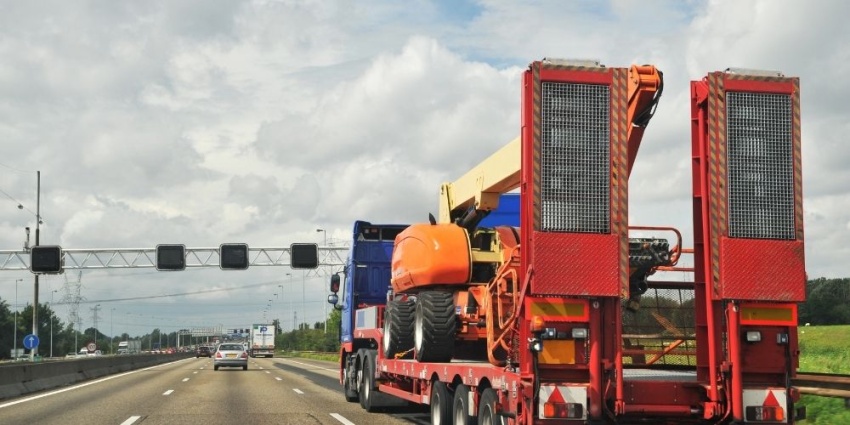
Heavy machinery freight shipping isn’t your everyday delivery. We’re talking about moving excavators, CNC machines, industrial HVAC units, or even entire production lines across states or borders. These shipments are oversized, expensive, and often critical to keeping businesses running. The stakes are high — delays, improper handling, or missing permits can cost thousands of dollars.
That’s why companies across the U.S. trust Northwest Shippers Inc. With years of proven expertise, a nationwide network, and a team dedicated to transparency, safety, and precision, we take the stress out of machinery transport. Whether you’re relocating equipment across town or across the country, our team ensures your freight arrives exactly where it needs to — safely, on time, and without the guesswork.
In this guide, we’ll break down what heavy machinery freight shipping really means, how the process works, what it costs, and why Northwest Shippers Inc. stands out as the partner you’ll want by your side.
Key Takeaways
- Know what qualifies as heavy machinery freight shipping and why it requires specialized handling.
- Follow the right process — from prepping and packaging to permits and delivery.
- Understand cost drivers so you can budget with confidence.
- Choose a partner you can trust — safety, transparency, and experience matter.
- Use our step-by-step checklist to prepare your shipment the right way.
What Counts as Heavy Machinery Freight Shipping?
Not every shipment needs a specialized trailer, but when you’re dealing with oversized or high-value equipment, you can’t just call the local mover.
Heavy machinery freight shipping typically applies when your load:
- Weighs more than 10,000 pounds
- Exceeds standard trailer dimensions
- Requires special handling, permits, or escort vehicles
- Involves sensitive or high-value equipment
Common Examples of Machinery We Ship
- Construction equipment: excavators, bulldozers, backhoes
- Agricultural machinery: tractors, combines, balers
- Industrial and manufacturing: CNC machines, presses, turbines
- Commercial systems: HVAC units, medical machines, restaurant equipment
If your equipment doesn’t fit neatly into a standard freight category, chances are it qualifies as heavy machinery freight.
The Complete Process of Machinery Shipping
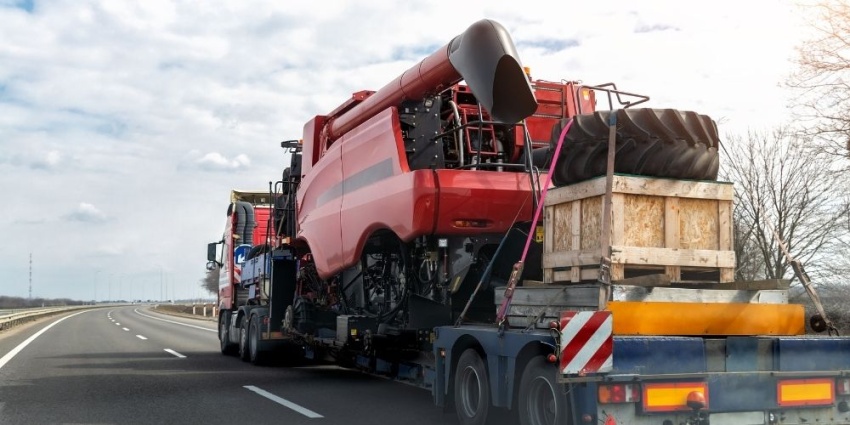
Shipping machinery isn’t as simple as “pick it up and drop it off.” Each step matters.
Step 1 – Prepping the Equipment
Drain all fluids (oil, gas, hydraulic). Disconnect batteries. Lock down moving parts. This prevents leaks, accidents, and hazmat fees.
Step 2 – Packaging & Protection
Use custom crates, heavy-duty strapping, or protective padding. Vulnerable parts like screens, glass, or electronics should be wrapped securely.
Step 3 – Measurements & Weight
Accurate dimensions and weight are non-negotiable. Even a few inches off can change the trailer type required or cause compliance issues on the road.
Step 4 – Choosing the Right Transport Method
- Flatbeds: Standard choice for most machinery.
- Lowboys: Handle taller equipment by sitting closer to the ground.
- Step-deck trailers: Perfect for oversized but not extreme loads.
- RGN trailers: Detachable gooseneck makes loading heavy, self-propelled equipment easier.
Step 5 – Permits & Documentation
Oversized loads require state permits. Crossing into Canada or Mexico? Customs paperwork is a must. A professional machinery transport company handles all of this so you don’t have to.
Step 6 – Loading & Delivery
Loading might require cranes, forklifts, or ramps. At delivery, expect similar needs. The right partner coordinates this seamlessly.
How Much Does Heavy Machinery Freight Shipping Cost?
Here’s the truth: there’s no one-size-fits-all price. But understanding the factors helps you budget smarter.
Average Rates:
- Short hauls: $4–$5 per mile
- Long hauls: $1.50–$2.50 per mile
What Impacts Cost?
- Distance: A 200-mile trip costs more per mile than a 2,000-mile trip.
- Size & Weight: The bigger the load, the more specialized the trailer.
- Timing: Rush jobs or seasonal delays (like winter storms) increase rates.
- Permits & Escorts: Oversized loads often require pilot cars or restricted routes.
- Pickup & Delivery Locations: Remote job sites usually cost more.
Example:
- A bulldozer shipped 500 miles might cost ~$2,500.
- A CNC machine shipped cross-country could run ~$8,000–$10,000 depending on permits and escort requirements.
With Northwest Shippers Inc., you’ll always know your costs upfront. No hidden fees, no last-minute surprises.
Why Choose Northwest Shippers Inc. for Heavy Machinery Freight Shipping?
When the stakes are high, who you partner with matters.
Expertise in Oversized Load Logistics
We’ve handled everything from small generators to 100,000-pound construction cranes. Our team knows the routes, the permits, and the equipment required.
Nationwide & Cross-Border Coverage
Whether your freight is moving from Seattle to Miami or across the border into Canada or Mexico, we’ve got the network and expertise.
Transparent Pricing & Real-Time Tracking
No vague estimates. You get a clear, competitive quote and real-time updates from dispatch to delivery.
Safety, Insurance, and Dedicated Specialists
Every client works with a transport specialist who manages the process from start to finish. Insurance is standard — not an add-on.
Checklist for Preparing Your Machinery Shipment
Here’s a simple list you can use before shipping:
- Drain fluids (oil, gas, hydraulics)
- Disconnect batteries and secure wires
- Document condition with photos
- Wrap sensitive components (screens, glass)
- Confirm measurements and weight
- Provide paperwork (BOL, permits if needed)
- Confirm loading/unloading equipment availability
FAQs
1. What qualifies as heavy machinery freight shipping?
Anything oversized, over 10,000 lbs, or requiring special permits/equipment.
2. How much does it cost?
Typically $4–$5 per mile short haul, $1.50–$2.50 per mile long haul, depending on size and route.
3. Do I need permits?
Yes, for oversized loads. Northwest Shippers handles all required state and cross-border permits.
4. What trailers are used?
Flatbeds, lowboys, step decks, and RGNs — depending on your equipment.
5. How should I prepare my machinery?
Drain fluids, secure moving parts, protect sensitive components, and document condition with photos.
Conclusion
Heavy machinery freight shipping doesn’t have to be a headache. With the right preparation, clear understanding of costs, and a trusted partner, your equipment will arrive safely, on schedule, and within budget.
Northwest Shippers Inc. takes pride in making the process smooth, transparent, and stress-free — whether you’re shipping across the state or across the continent.
Ready to ship heavy machinery safely and affordably? Request a free freight quote today from Northwest Shippers Inc.
Published