
What technology does Northwest Shippers use in freight management?

What technology does Northwest Shippers use in freight management? In plain terms: the tools that make your shipments predictable, transparent, and faster to cash. At Northwest Shippers Inc., we combine a modern TMS, IoT-driven telematics, AI-powered ETAs, and a white-label customer portal to orchestrate every move—from quote to proof of delivery. Along the way, we’ll show why state-of-the-art tracking improves customer satisfaction and how our systems provide real-time access to transportation assets without replacing the human experts who pick up the phone when plans change. In this article, we’ll unpack our stack, show where it outperforms common industry setups, and give you checklists you can use with any provider (including us).
Key Takeaways
- Our stack blends TMS + APIs + EDI + IoT so data flows once and updates everywhere.
- State-of-the-art tracking improves customer satisfaction via proactive alerts, accurate ETAs, and fewer “where’s my truck?” calls.
- You get real-time access to transportation assets through a secure portal with live maps, documents, and exception flags.
- Automation speeds quotes, tendering, appointments, and invoices—without replacing humans for edge cases.
- We publish load photos/BOLs/PODs in the portal to reduce claims friction and accelerate revenue recognition.
Our Core Stack: The Tech That Powers Every Shipment
Northwest Shippers runs a best-in-class Transportation Management System (TMS) at the center of operations. Around it, we connect APIs, EDI, telematics IoT devices, geofencing, and AI ETA models so each milestone triggers the next action automatically.
What technology does Northwest Shippers use in freight management (at a glance)?
- TMS Orchestration: Quoting, rating, tendering, carrier scorecards, appointment scheduling, invoice audit.
- API & EDI Bridges: One-time data entry; status codes, ASNs, 214s, invoices (210s) flow to your ERP/WMS.
- IoT/Telematics: Tractor/trailer GPS, door and temperature sensors (when applicable), engine diagnostics.
- AI-Powered ETAs: Blends traffic, weather, dwell history, and driver hours to predict time windows that hold up in the real world.
- Customer Portal: Live map, order history, documents, chat, and exception dashboards.
- Digital Documents: eBOL, digital POD, load photos; automated doc matching for quicker billing.
Why it matters
This architecture balances automation with human judgment. Our tech clears the “busy work,” while our dispatch and customer success teams focus on exceptions, carrier coaching, and win-win plans when reality changes.
Why state-of-the-art tracking improves customer satisfaction
When customers can see where their freight is—and what is likely to happen next—they plan better, avoid costly idle time, and stop chasing status via email.
What “state-of-the-art” means here
- Live Location & Geofencing: Arrival/Departure events fire automatically at yards, DCs, or job sites, creating a trustworthy milestone trail.
- Proactive Alerts: We notify stakeholders before an ETA slips. That gives you time to pivot labor, dock doors, or downstream production.
- Root-Cause Evidence: With breadcrumb trails and load photos, we explain delays (weather, traffic, detention) and prevent repeat issues.
Proof in practice (example)
A retail client with tight store windows cut OOS shelf hours by 28% after switching to proactive ETA alerts. They reallocated labor based on live geofenced arrivals instead of static schedules—simple change, big impact.
How our systems provide real-time access to transportation assets
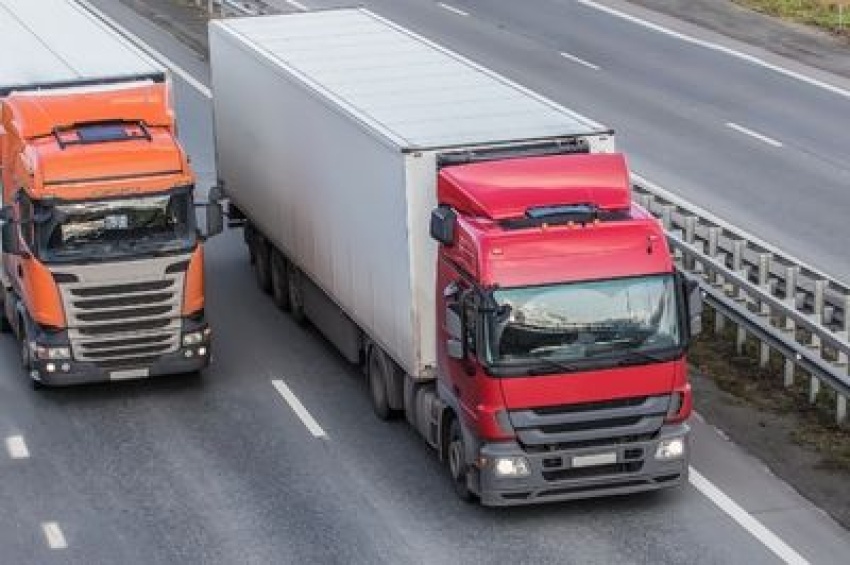
“Real-time” shouldn’t mean “ten clicks away.” We put the right info on one screen.
What you see in the portal
- Fleet-level map: Filter by PO, PRO, reference, lane, asset, temperature (if reefer).
- Stop timeline: All planned vs. actual times, with dwell counters.
- Docs-on-demand: eBOLs, lumper receipts, scale tickets, PODs posted within minutes of capture.
- Exception board: Late risks, dwell alerts, appointment conflicts, overweight warnings.
- Collaboration tools: @mentions, role-based permissions, and an audit log for accountability.
Security & governance
SSO, MFA, and role-based access keep sensitive data safe. We store an immutable trail of edits and status changes—critical for audits and claims.
Automation Where It Helps (and Humans Where It Matters)
Some competitor content warns that tech can’t replace relationships—they’re right. We use automation for speed and accuracy, not as a substitute for judgment.
Smart automation examples
- Rating & Tendering: Pull current contract, dynamic, and market rates; auto-tender to best-fit carriers by lane KPI and compliance.
- Appointment Bots: When a pickup shifts, our bot finds new slots within service levels and updates all parties.
- Invoice Audit: OCR + rules catch accessorial mismatches and duplicate billing; exceptions go to a human in AR.
Human-first moments
Weather detours, commodity sensitivities, union sites, secure facilities, high-value escorts, construction job-site constraints—these stay with trained ops specialists. Technology equips them with facts and context to act fast.
Implementation Playbook: How We Stand Up Your Tech (Without Headaches)
Change management kills many good platforms. Ours focuses on incremental wins.
Week 0–2: Discovery & Connect
- Map your data (ERP/WMS/OMS), label must-have milestones, define KPI baselines.
- Spin up portal users and SSO; stand up initial EDI/API endpoints.
Week 2–4: Pilot & Calibrate
- Pick 1–2 lanes and 3–5 carriers; validate statuses, geofences, and ETA accuracy.
- Build exception rules (e.g., alert only when variance >30 minutes).
Week 4–8: Expand & Automate
- Add lanes, extend doc capture, turn on invoice audit, and push data back to your ERP/WMS.
- Train superusers; set up QBR dashboards (OTIF, dwell, claim ratio, cost-to-serve).
H4 Tip — Pro move
Start with “known pain” lanes (chronic dwell, high claims). Early wins build buy-in and pay for the rollout.
KPIs We Track (and Share) to Prove Value
Tools are only as good as the outcomes they create.
- OTIF (On-Time In-Full)
- ETA Accuracy vs. Actual (variance bands)
- Dwell/Detention per stop
- First-Attempt Tender Acceptance (by lane and carrier cohort)
- Claim Ratio & Cycle Time
- Days-to-Invoice / Days Sales Outstanding
We benchmark pre-/post-implementation so you can quantify lift—not just feel it.
Integrations: Meeting You Where Your Data Lives
Your stack is unique; we adapt.
- ERP/WMS/OMS: SAP, Oracle, Microsoft, NetSuite, Blue Yonder, Manhattan, etc.
- Data feeds: EDI (204/214/210/990), REST APIs, webhooks, flat files for legacy partners.
- Carrier tech: MacroPoint/Project44, OEM telematics, ELDs, camera sensors, temperature probes.
- Analytics: We can export to your BI layer (Power BI, Tableau, Looker) or provide curated dashboards.
Risk & Compliance: Built into the Workflow
Compliance isn’t a bolt-on; it’s native.
- Carrier Vetting: Insurance verification, safety scores, lane scorecards, and corrective-action workflows.
- Securement/Commodity Rules: Flag loads that require special handling or escorts.
- Data Privacy: SOC2-aligned practices, encryption in transit and at rest, least-privilege access controls.
- Audit Trail: Every update stamped and attributable—your legal team will love it.
Buyer’s Checklist (Use This Anywhere)
- Bring this to your next logistics review—whether you choose us or not.
- Can your provider show “what technology does Northwest Shippers use in freight management”–level capabilities (TMS + APIs + IoT + AI ETAs) in a live demo?
- Do they explain why state-of-the-art tracking improves customer satisfaction in your context (labor, dock scheduling, production)?
- Prove how our systems provide real-time access to transportation assets (portal, geofencing, doc capture).
- What % of loads have digital POD within 60 minutes of delivery?
- How accurate are ETAs (± minutes), and what’s the alert threshold?
- Show pre-/post- metrics (OTIF, dwell, claim ratio, DSO) on similar lanes.
- What’s the exception playbook when things go sideways (weather, strikes, closures)?
- How fast can they add a new site, carrier, or lane—and who owns testing?
FAQs (People Also Ask)
Does this technology replace my current ERP/WMS?
No. We integrate with it, so your teams keep their system of record while gaining live shipment context.
What if a carrier lacks advanced telematics?
We bridge with ELD location pings, driver app check-calls, and facility geofences to maintain visibility.
How quickly can we go live?
Most pilots run in 4–6 weeks. Rollout pace depends on data readiness and how many lanes/carriers you add.
What about sensitive or high-value freight?
We apply stricter geofences, driver authentication, route locks, and additional document/photo capture.
How do you protect our data?
Encryption, SSO/MFA, role-based access, and auditable logs. We minimize data sharing to least-necessary fields
Conclusion
So—what technology does Northwest Shippers use in freight management? A pragmatic stack that pairs TMS orchestration, API/EDI connectivity, IoT telematics, AI ETAs, and a real-time customer portal with seasoned humans who manage exceptions and relationships. That’s why state-of-the-art tracking improves customer satisfaction in measurable ways, and how our systems provide real-time access to transportation assets so your team plans with certainty instead of guesswork. If your goal is to cut dwell, lift OTIF, and get paid faster, the right tech—and the right team—make it repeatable.
Schedule a discovery call today. We’ll demo the portal, map two of your lanes, and show you the KPI lift you can expect in 60 days—no fluff, just outcomes.
Published